Mar 3, 2026
•
by
Interlune
Interlune and Astrolab Collaborate on Technology for Harvesting Resources and Building Infrastructure on the Moon
Companies Completed Concept Study to Integrate Lunar Excavation Hardware onto FLEX Rover; Planning Hardware Testing in Houston
SEATTLE and HAWTHORNE, Calif – March 3, 2026 – Interlune, a natural resources company, and Astrolab, a multi-planetary mobility and logistics company, today announced they are working together to integrate Interlune excavation technology onto the Astrolab Flexible Logistics and Exploration Vehicle (FLEX), and are planning hardware testing in Houston.
“Reliable, autonomous mobility is crucial to the Interlune harvesting system and broader lunar infrastructure development,” said Rob Meyerson, co-founder and CEO of Interlune. “Astrolab’s FLEX is the right vehicle for the job.”
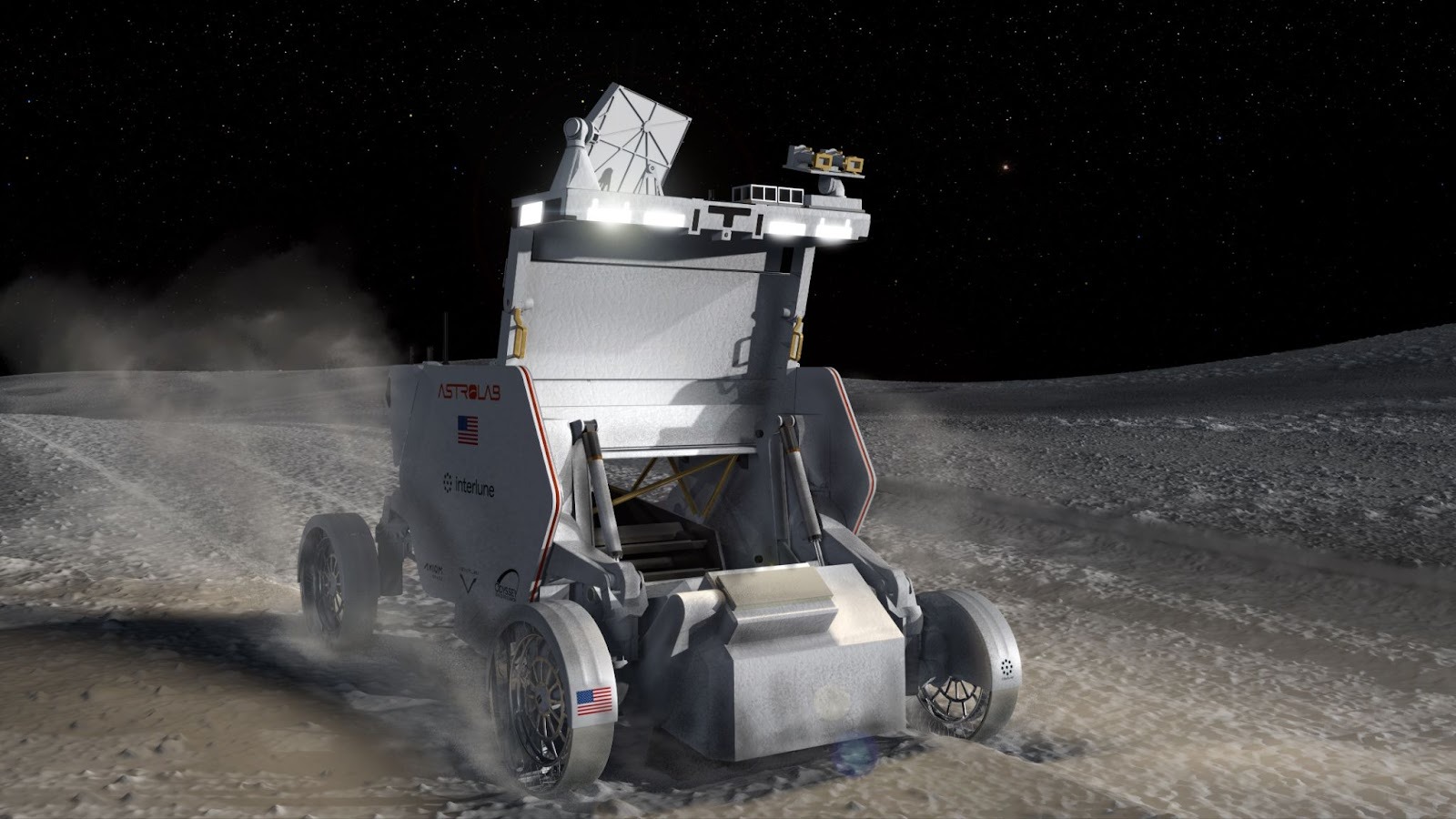
The project is another step toward Interlune operationalizing its novel system to harvest industrial quantities of natural resources from space, starting with helium-3, which will require a fleet of lunar rovers. Mobilized excavation technology will also serve various commercial and government customers in Moon base site preparation, including the construction of roads, berms, and other structures. Interlune has partnered with Vermeer Corporation to develop technology for high-volume, continuous excavation on the Moon.
“Working with Interlune further differentiates FLEX as the rover of choice for commercial and government Moon missions,” said Jaret Matthews, Astrolab founder and CEO. “Interlune’s expertise in developing and testing highly specialized regolith simulant will further enhance FLEX’s ability to mitigate dust and operate in extreme environments.”
Prototype testing will be centered in Houston, a rapidly expanding space hub where both companies have research and development facilities and staff. Astrolab was the first company to lease testing space at the Texas A&M University Space Institute, currently under construction at NASA's Johnson Space Center.
The Houston-based Interlune Research Lab (IRL) develops and tests highly specialized simulants of Moon dirt, or regolith, and is partially funded by the Texas Space Commission (TSC). Testing with simulated lunar regolith supports the development of technology and equipment that can operate effectively in the harsh lunar environment.
This work is the latest in an ongoing collaboration between Interlune and Astrolab. In August 2025, Interlune announced plans to include a multispectral camera on Astrolab’s FLEX Lunar Innovation Platform (FLIP) on its upcoming mission to the Moon. The camera, developed in partnership with NASA, will be used to estimate helium-3 quantities and concentrations in lunar regolith.
Both founded in 2020, Interlune and Astrolab are part of a new generation of space companies developing technologies with extensive commercial and government applications.
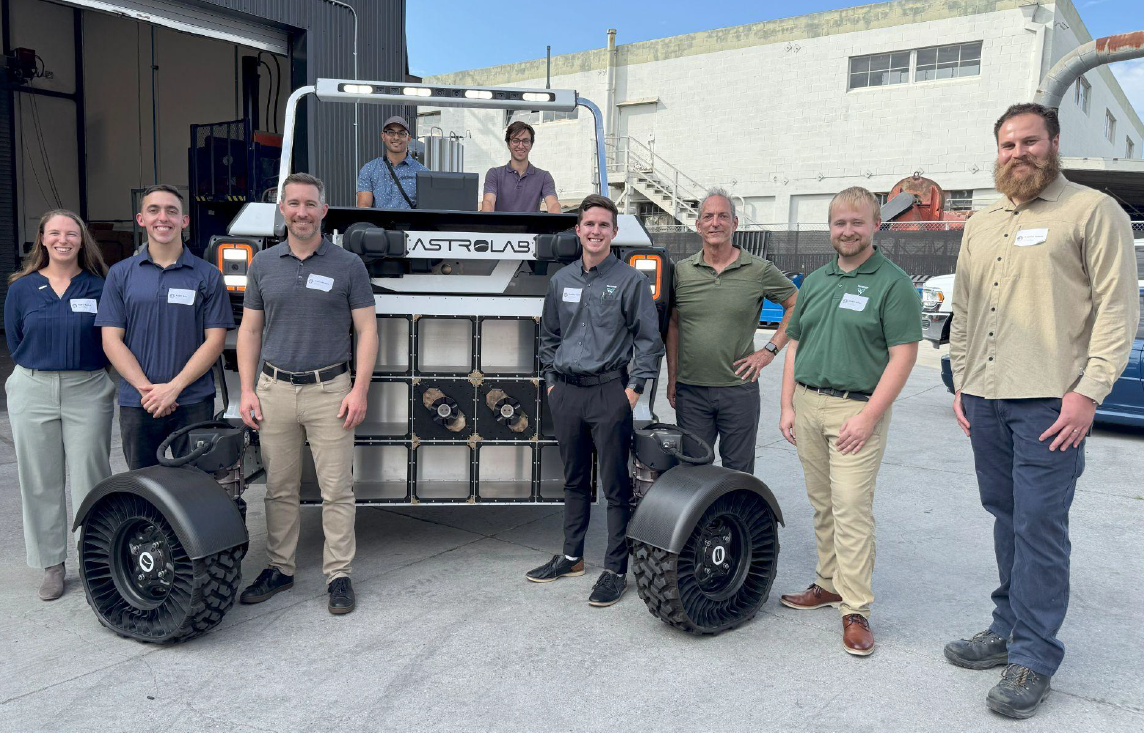
Interlune technology will establish the backbone for developing dual-use lunar infrastructure and commercializing natural resources from space. Astrolab is pioneering new ways to explore and operate on distant planetary bodies, focusing on designing, building, and operating a fleet of multi-purpose commercial planetary rovers to extend and enhance humanity’s presence in the solar system.
About Interlune
Interlune is a privately funded natural resources company committed to sustainable and responsible harvesting of natural resources from space to benefit humanity. Based in Seattle, Interlune was founded in 2020 by a team of highly experienced government and industry experts. Aiming to be the first U.S. company to commercialize resources from space, Interlune has developed patent-pending technology that harvests materials from the lunar soil, or regolith, using the smallest, most energy-efficient machinery of its kind. Over time, Interlune will harvest additional resources—including industrial metals, rare earth elements, and water—to support a long-term presence on the Moon and a robust in-space economy. The company has raised $18 million to date and has received contracts from NASA, the National Science Foundation (NSF), the U.S. Department of Energy, the Texas Space Commission, as well as several commercial customers. Follow Interlune on LinkedIn, X, and Instagram.
About Astrolab
Astrolab is on a mission to move humanity forward to the next horizon by designing, building, and operating a fleet of multi-purpose rovers for all planetary surface needs. Formed by a highly specialized team of NASA veterans, former SpaceXers and JPL engineers, Astrolab is laser-focused on providing adaptive mobility solutions essential for life beyond Earth. The team has industry leading experience in terrestrial and planetary robotics, electric vehicles, human spaceflight and more. Astrolab’s depth of experience and strategic partnerships with a wide array of world-class institutions enables the delivery of Lunar and Mars mobility offerings at maximum reliability, flexibility, and cost effectiveness. The company is headquartered in Hawthorne, Calif. For more information, visit Astrolab.space and follow us on X, LinkedIn, YouTube and Instagram.